
The government has taken up the ‘Padma Barrage (Phase I)’ project at a cost of Tk 34,497.25 crore to restore the country’s main river system, reduce salinity invasion, expand irrigation facilities and maintain ecological balance.
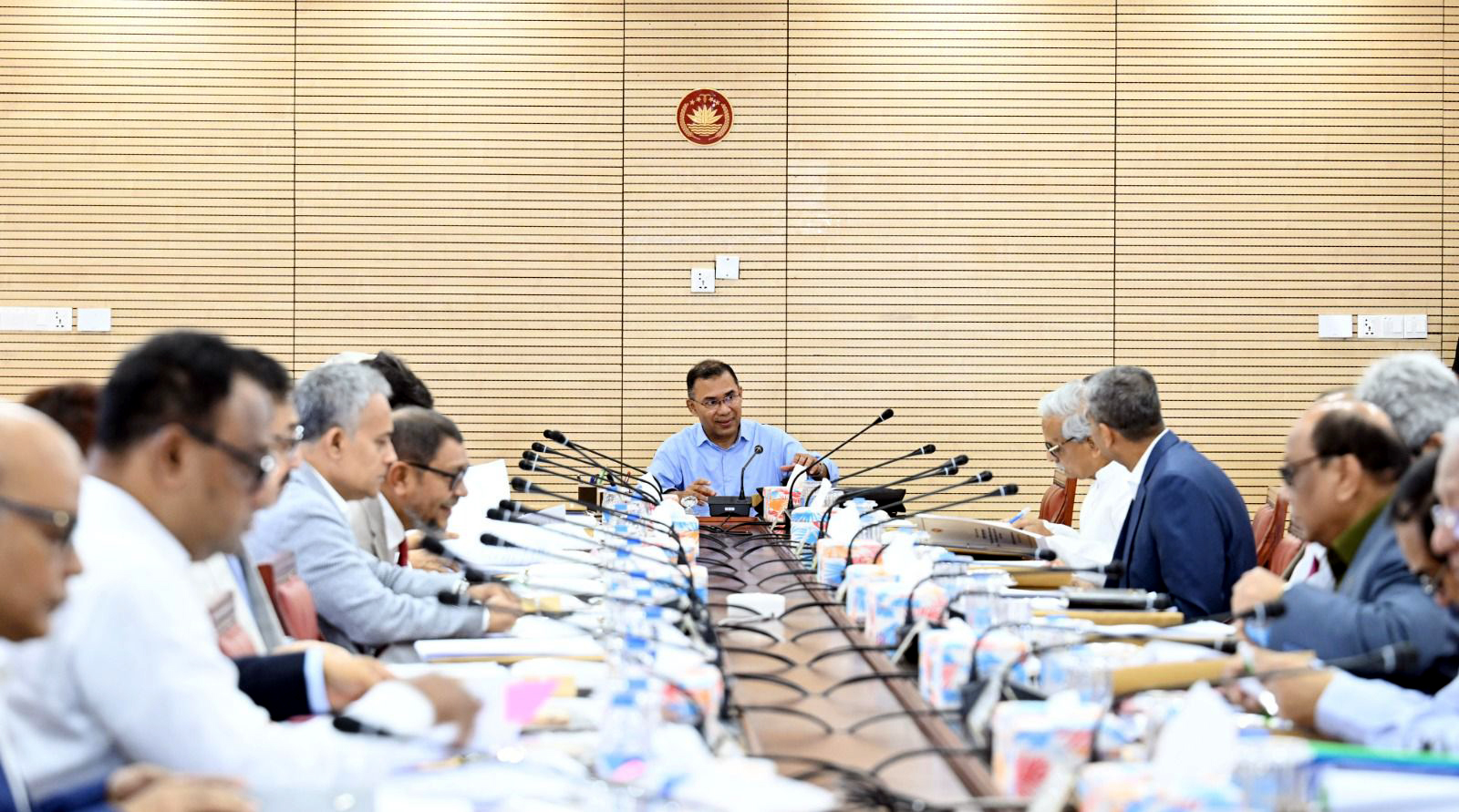
The mega project was approved at a meeting of the Executive Committee of the National Economic Council (ECNEC) held today at the conference room of the Cabinet Division of the Bangladesh Secretariat. ECNEC Chairperson and Prime Minister Tarique Rahman presided over the meeting.
On the recommendation of the Planning Commission, the Bangladesh Water Development Board (PWDB) under the Ministry of Water Resources will implement the project. The project will be implemented with 100% government funding from July 2026 to June 2033.
Speaking to reporters after the ECNEC meeting, Water Resources Minister Md. Shahiduddin Chowdhury Annie said that this is a very important project for the nation. One-third of the country’s area and about 70 million people will benefit from it.
The Planning Commission said that 19 districts of Khulna, Dhaka, Rajshahi and Barisal divisions will come under this project.
The main objective of the project is to restore the flow and navigability of major river systems including Hisna-Mathabhanga, Gorai-Madhumati, Chandana-Barashia, Baral and Ichamati.
It also aims to reduce salinity in Satkhira, Khulna and Bagerhat regions, ensure freshwater supply for the Sundarbans, conserve biodiversity, eliminate waterlogging including Bhabadah in Jessore, improve drainage system, recharge groundwater and reduce arsenic pollution.
The project will increase irrigation facilities in the southwest, midwest and northwest regions by supporting the ongoing Ganga-Kapotaksha (G-K) Irrigation Project and the proposed North Rajshahi Irrigation Project.
The project is also expected to play a role in employment generation, planned land development and urbanization.
The Planning Commission said the project is in line with the government’s election manifesto-2026. In particular, it is related to the commitment to implement the Padma Barrage, prevent river erosion, conserve water resources, reduce salinity in agricultural lands, ensure flood protection, restore natural water flow through dredging and increase the efficiency of the irrigation system.
The project will construct a 2.1-km-long main Padma Barrage. It will also have 78 spillways, 18 undersluices, two fish passes, a boat lock, a guide dam and an approach dam.
In addition, the construction of offtake structures on the Gorai, Chandana and Hisna rivers, dredging of 135.60 km of the Gorai-Madhumati river system, re-excavation of 246.46 km of drainage channels on the Hisna river system and construction of 180 km of afflux dams will be carried out.
There are also plans to construct two hydroelectric power plants with a total generation capacity of 113 MW under the project.
If implemented, the project is expected to contribute 0.45 percent to the national GDP and generate direct financial benefits of about 8,000 crore taka annually.
At the same time, irrigation facilities will be ensured in about 2.88 million hectares of agricultural land in the greater Kushtia, Faridpur, Jessore, Khulna, Barisal, Pabna and Rajshahi regions and about 2,900 million cubic meters of water will be saved in the Padma River.
The background report of the project states that the Padma-dependent regions of the southwest and northwest of the country account for about 37 percent of the country’s total land area and are home to about one-third of the country’s population.
It is mentioned that in the 1970s, through the construction of the Farakka Barrage in West Bengal, India, 35,000 to 40,000 cusecs of water was diverted from the Padma-Ganga to the Bhagirathi-Hooghly rivers during the dry season to maintain the navigability of the Kolkata Port.
As a result, the dry season flow of the Padma River in the Bangladesh part has significantly decreased and the major rivers in the southwest and northwest have started drying up.
As a result, agriculture, fisheries, forest resources, water transport, domestic water availability and the overall ecosystem have been severely affected.
The Planning Commission also said that due to the reduced flow of freshwater, salinity has increased in the dry season in the rivers and canals of the southern region, which has become a major threat to livelihoods, biodiversity and the Sundarbans.
According to the commission, it is essential to ensure sustainable water resources management in the greater Rajshahi, Pabna, Kushtia, Jessore, Khulna, Faridpur and Barisal regions, as the Padma is the main source of surface freshwater in these areas.
Source : BSS
Views: 2