
Rezaul Karim Reza:
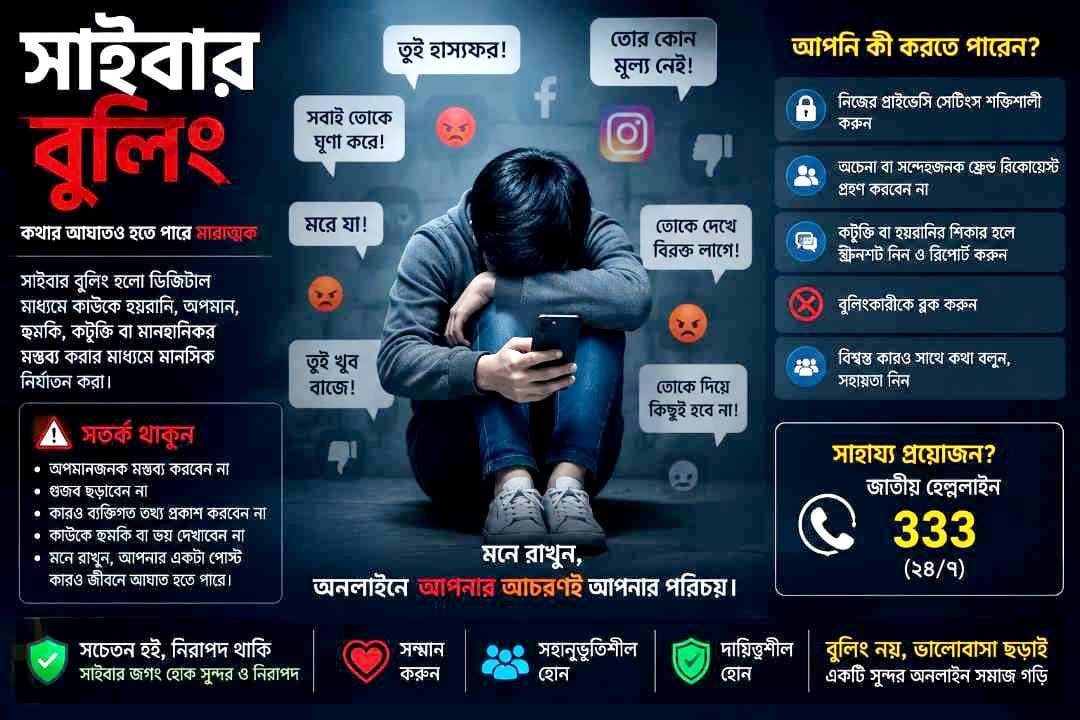
The rapid growth of information technology has made our lives easier, but it has also created new risks. One of the most serious of these is cyberbullying. In simple terms, cyberbullying is the deliberate use of the internet or digital platforms to insult, threaten, harass, humiliate, or emotionally hurt another person.
Cyberbullying can occur on social media platforms such as Facebook, Instagram, and TikTok, as well as through messaging apps, online games, emails, and other digital services. In many cases, offenders hide behind fake accounts, making it more difficult for victims to identify them or seek justice.
Experts say that cyberbullying affects not only children and teenagers but also university students, young adults, professionals, and people from all walks of life. Once harmful photos, videos, or false information are shared online, they can spread rapidly and become very difficult to remove. This often increases the emotional stress faced by victims.
Today, incidents such as abusive comments from fake accounts, sharing private photos or videos without permission,হ spreading false information, posting insulting remarks, and repeatedly sending hateful messages are becoming increasingly common on social media. These actions can damage a person’s confidence, isolate them socially, and seriously affect their mental well-being.
Many people believe that online harassment is less harmful than bullying in real life. However, experts warn that cyberbullying can have long-lasting effects on a person’s personal, social, and emotional life. Unlike face-to-face bullying, harmful online content can remain visible and continue to affect victims long after it is posted.
Psychologists say that victims of cyberbullying may suffer from anxiety, depression, sleep disorders, difficulty concentrating on studies or work, and a loss of self-esteem. Many victims remain silent because of fear, shame, or social pressure. Instead of hiding the problem, they should seek support from family members, friends, teachers, or trusted individuals. In severe cases, cyberbullying may even increase the risk of self-harm.
Experts believe that preventing cyberbullying requires more than legal action. Families, educational institutions, and society must work together to raise awareness. Parents should stay informed about their children’s online activities, teach them safe internet practices, and encourage them to report any form of online harassment without fear.
Schools and colleges should also educate students about digital safety, responsible online behavior, and cybercrime. While technology offers many opportunities, careless or irresponsible use can expose people to serious risks.
Cybersecurity experts advise victims not to respond to abusive messages. Instead, they should keep screenshots as evidence, block and report the offending accounts, and contact law enforcement authorities if necessary. Using strong passwords, limiting the sharing of personal information, and regularly reviewing privacy settings are also important steps to improve online security.
As digital technology becomes a larger part of everyday life, responsible online behavior is more important than ever. Awareness, mutual respect, and timely action are the most effective ways to reduce cyberbullying. Creating a safer digital environment is a shared responsibility, and every internet user has a role to play.
Views: 7