
Rajiv Dey :
Important demands of the housing sector ignored in the budget, fear of further increase in flat prices
The Real Estate and Housing Association of Bangladesh (REHAB) has expressed deep concern over the proposal to impose a new 15 percent tax on flats received by landlords in the proposed national budget 2026-27 and the demand to reduce registration costs being ignored.
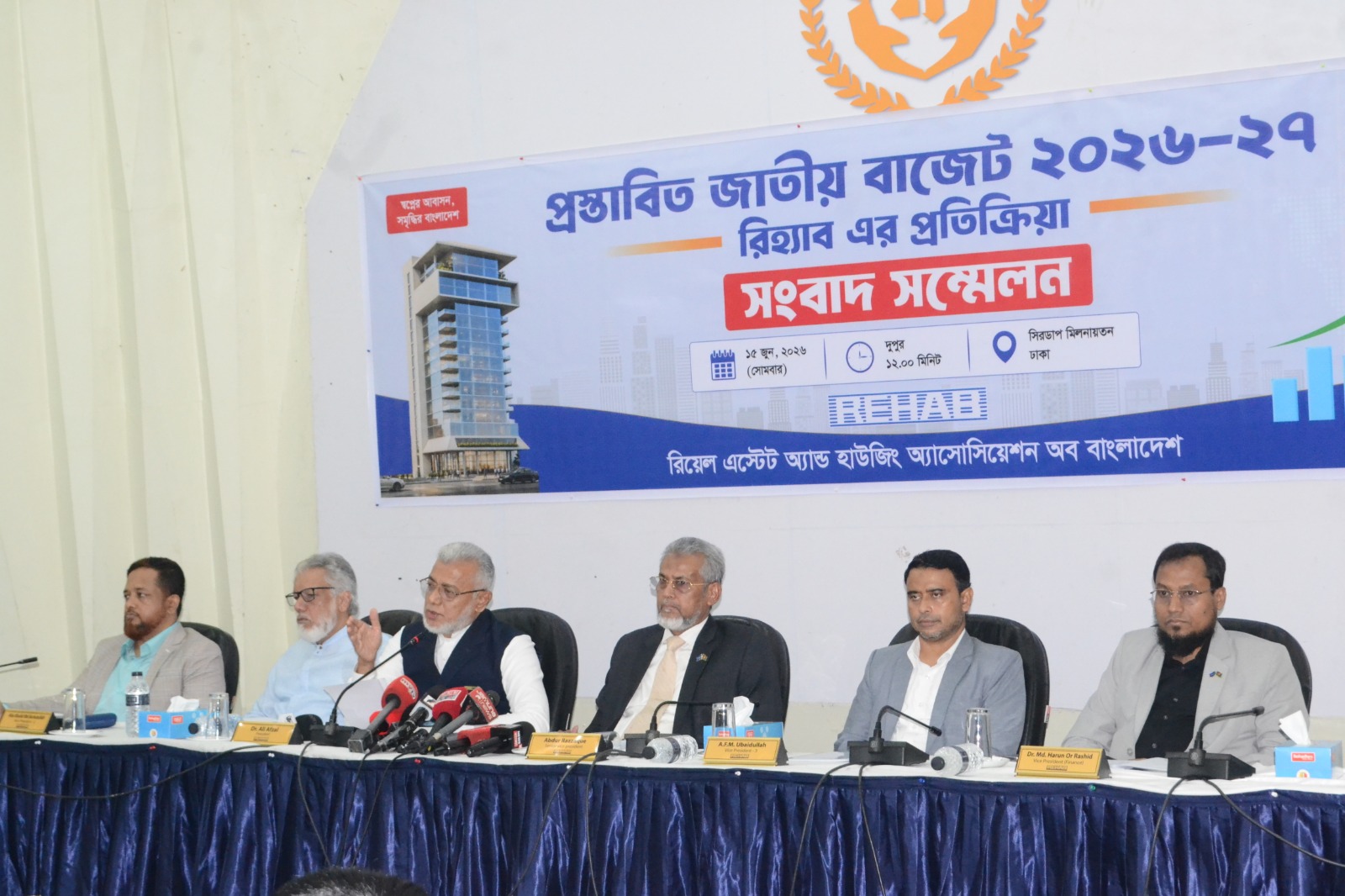
At a press conference organized at the CIRDAP auditorium in the capital today, REHAB President Dr. Ali Afzal said that the housing sector is currently going through a buyer crisis, high construction costs, financing crisis and policy uncertainty. In such a situation, imposing new taxes and maintaining the existing high registration costs will push the housing sector further into crisis.
He said that currently, 15 percent tax is paid on the signing money given to the landlord. In addition, the proposed budget has made a provision to pay 15 percent tax to the landowner on the flats built by the developer. As a result, joint venture projects will be discouraged, new projects will decrease and investment in the housing sector will decrease.
REHAB believes that if a landowner gets 12 flats in a 24-unit project and their value is Tk 120 million, he will have to pay about Tk 18 million in tax. That is, the equivalent value of almost two flats will be lost in tax. Ultimately, the burden of this additional cost will fall on the flat buyers and the price of housing will increase further.
At the press conference, REHAB welcomed the decision in the proposed national budget to provide an opportunity to invest “self-motivated investment” or undisclosed money without question, subject to payment of prescribed taxes in the purchase and sale of land, flats and buildings. REHAB President Dr. Ali Afzal expressed his sincere gratitude to the Honorable Prime Minister, Honorable Finance Minister and Chairman of the National Board of Revenue for this.
He said, a significant amount of undisclosed money in the Bangladeshi economy has been outside the mainstream economic activities for a long time due to various reasons. If this money gets the opportunity to invest in productive sectors including housing, it will return to the mainstream of the economy and will play a positive role in investment, job creation and expansion of economic activities. REHAB believes that by giving the opportunity to legitimately invest undisclosed money through payment of prescribed taxes, new money will flow into the mainstream of the economy and the overall economy including the housing sector will benefit.
However, REHAB believes that in the long term, it is necessary to develop a simple, transparent and investment-friendly tax structure so that people pay taxes spontaneously and the tendency to create undisclosed money gradually decreases. At the same time, REHAB welcomes this positive initiative of the government, but strongly protests the proposal to impose additional tax on construction materials and a new 15 percent gain tax on flats received by landowners.
The press conference said that before the budget announcement, REHAB had demanded a reduction in registration costs in several meetings at various levels of the government, including the National Board of Revenue, Bangladesh Bank and the government. Currently, more than 13 percent of the cost of registering flats and land has decreased significantly.
REHAB’s proposal was to reduce the registration cost to 7 percent. REHAB believes that reducing the registration cost will increase property transactions, bring transparency to the market, encourage real transactions and increase the government’s revenue in the long run. But no initiative has been taken in this regard in the proposed budget.
Dr. Ali Afzal said that the housing sector is involved in about 269 linkage industries in the country and directly and indirectly ensures employment to about 5 million people. Therefore, instead of burdening this sector with additional taxes, it is necessary to provide investment-friendly policy support.
It was also mentioned at the press conference that several important proposals of REHAB, including home loans at single-digit interest rates, launching a secondary market, reducing registration costs and housing-friendly tax policies, were not reflected in the proposed budget.
Rehab has called for the withdrawal of the 15 percent tax imposed on flats received by landowners, reduction of registration fees to 7 percent, and ensuring investment-friendly policy support for the housing sector before the final approval of the national budget 2026-27.
Rehab believes that mobilizing the housing sector means increasing investment, creating employment, increasing government revenue, and further strengthening the country’s economic growth.
Views: 1