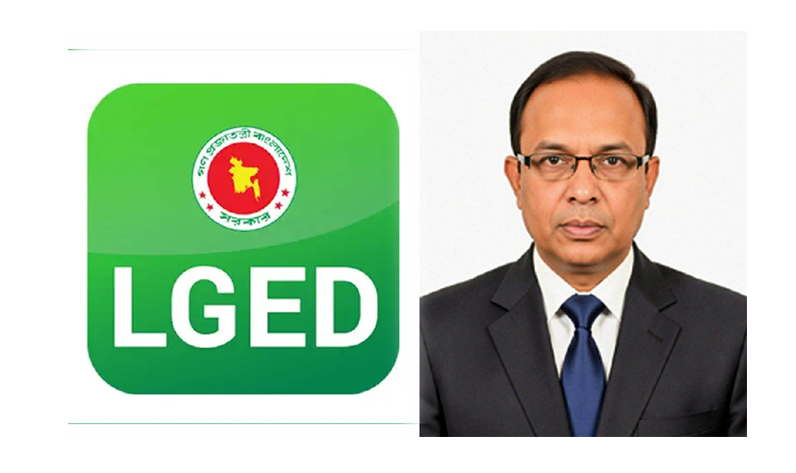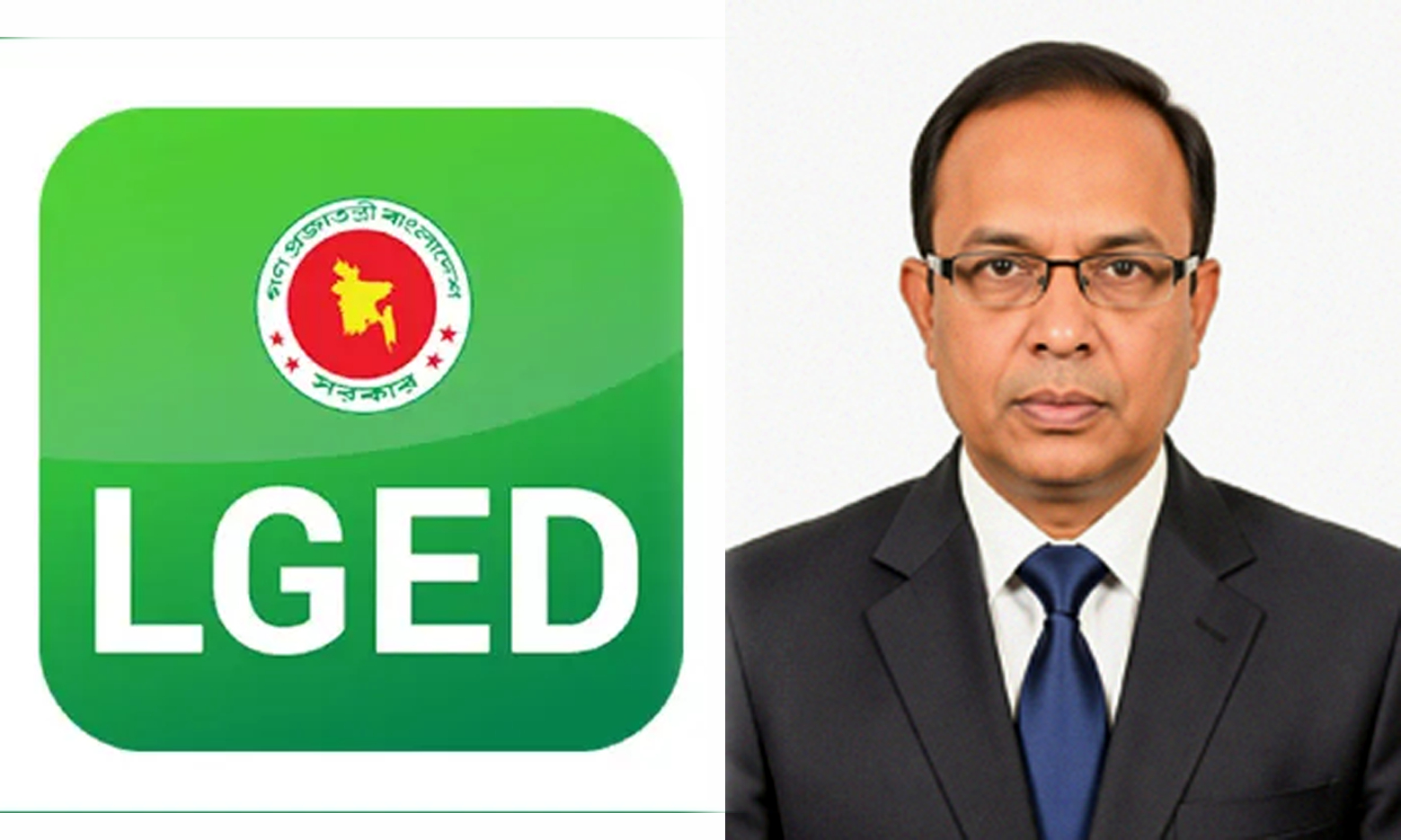

In the first part of this interview, LGED Chief Engineer Md. Belal Hossain discussed the agency’s development priorities, the challenges facing rural infrastructure, and the progress of major ongoing projects.
In this second part, he talks about climate-resilient infrastructure, the use of modern technology, digital monitoring, e-governance, anti-corruption measures, and the steps being taken to ensure the quality of construction projects.
Interview by Rezaul Karim Reza
Question: What kind of infrastructure is LGED now building in response to climate change?
Md. Belal Hossain:
Climate change has become one of the most important considerations in infrastructure development. That is why climate risk assessments are now carried out during the planning and design of every project.
In coastal areas, we are using high-performance marine concrete, epoxy-coated rebars (ECR), and salt-free water to improve resistance to salinity and natural disasters.
In flood-prone areas, measures such as raising road levels, improving drainage systems, and protecting road slopes are being taken.
We are also expanding the use of environmentally friendly construction technologies, including concrete uni-blocks instead of traditional burnt bricks, to help reduce carbon emissions.
Our goal is not simply to build infrastructure, but to create infrastructure that can withstand future climate challenges.
Question: How much has the use of modern technology increased in the construction of rural roads, bridges, and culverts?
Md. Belal Hossain:
The use of modern technology in LGED projects has increased significantly over the past few years.
Plastic waste and blended bitumen are now being used in road construction to improve durability and performance.
For bridges and culverts, the use of pre-stressed concrete and ready-mix concrete has greatly improved construction quality.
We have also expanded the use of modern software, Geographic Information Systems (GIS), and drone technology for project design, surveys, and supervision.
These technology-based systems have made project implementation both faster and more accurate.
Question: How far has LGED progressed in digital monitoring and e-governance?
Md. Belal Hossain:
LGED is one of the leading government agencies in Bangladesh when it comes to digital transformation.
Through our Project Monitoring System (PMS), the progress of fieldwork, photographs, and other project information can be monitored in real time from the headquarters. This has made decision-making faster and improved the pace of project implementation.
Under our e-governance initiatives, administrative functions- including e-File, e-GP, and human resource management- are now fully managed through digital platforms.
These initiatives have increased transparency while also improving administrative efficiency.
Question: What monitoring systems are in place to prevent corruption and irregularities?
Md. Belal Hossain:
LGED follows a zero-tolerance policy against corruption and irregularities.
Any complaint received is investigated immediately. When necessary, an internal investigation committee is formed, and if the allegations are proven, departmental and administrative action is taken against those responsible.
In addition, internal audits, regular monitoring, and digital management systems have significantly reduced the risk of financial and administrative irregularities.
Our goal is to build an institution based on transparency, accountability, and good governance.
Question: What changes have been made in contractor selection and quality control?
Md. Belal Hossain:
Contractors are now selected entirely through the electronic Government Procurement (e-GP) system, ensuring transparency and fair competition throughout the process.
Contractors are evaluated digitally based on their previous work experience, financial capacity, and overall performance.
Companies that fail to complete projects on time or deliver poor-quality work receive negative evaluations, which affect their future participation in projects.
To ensure the quality of construction materials, regular testing is carried out in laboratories in every district.
In addition, field officials conduct routine inspections, while special monitoring teams from the headquarters oversee project implementation to ensure that construction quality meets the required standards.
To be continued…
Views: 10