Rajiv Dey:
Primary and Mass Education State Minister Bobby Hajjaj has said that real development of education is not possible only through infrastructure construction, for this, skilled teachers, up-to-date curriculum and a joyful learning environment for children are needed. He said that children should be at the center of the education system. We should ensure such education that learning becomes a joy for them instead of a burden.
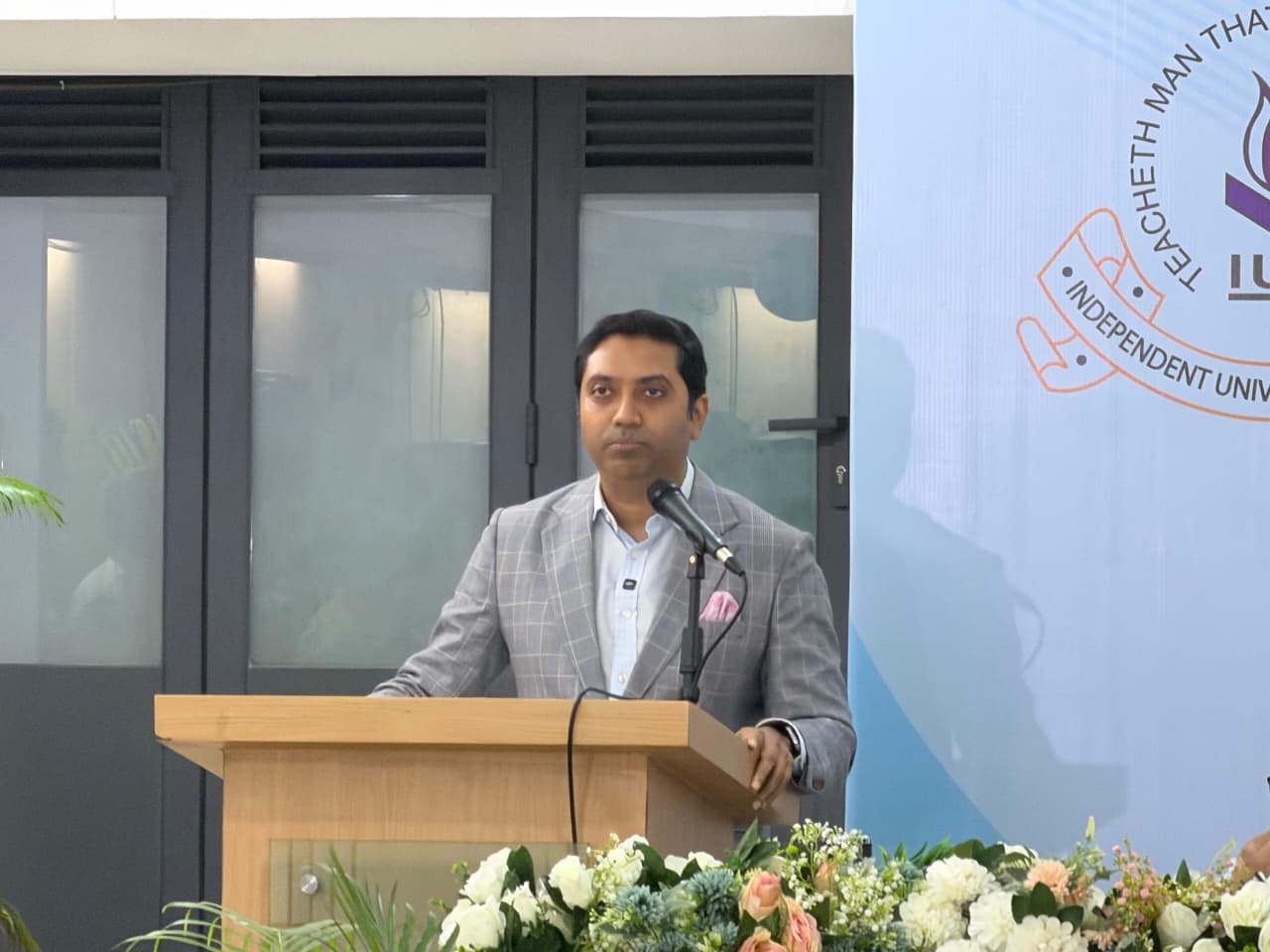
He said these things while speaking as the chief guest at the National Dialogue on Early Childhood Development Policy jointly organized by IUB and Bangladesh ECD Network at the Multipurpose Hall of Independent University, Bangladesh in Bashundhara, the capital today.
The State Minister said that the government is working to complete the work of curriculum restructuring within the next one year. At this time, he promised to ensure that the NCTB is free from unwanted influences and has the opportunity to work professionally independently.
The State Minister further said that improving the quality of education is not possible without improving the quality of life of teachers. If a teacher cannot live a respectable life financially, socially and professionally, then the desired change in the education system can never be achieved.
Regarding the conversion of government primary schools to one-shift, the State Minister said that due to two shifts, students are not getting enough time and attention in many cases. Therefore, a plan has been taken to convert all government primary schools in the country to one-shift schools in phases.
Referring to the issue of teacher training, Bobby Hajjaj said that after 2028, untrained teachers will not teach in any primary classroom in the country. This policy will be applicable to all educational institutions, whether government, private, kindergarten or English medium.
The program, chaired by IUB Vice Chancellor Professor M. Tamim, was attended by National Primary Education Academy Director General Farid Ahmed, IUB Board of Trustees Chairman Didar A. Hossain, representatives of various government and private organizations, and media personnel.
Views: 2