
Rajib Dey:
Until now, the work was evaluated at the government level only on the basis of the budget received and how much was spent. This is not really a scientific method. Currently, with the GPMS system, we can plan what goals and objectives we want to achieve after three or five years from where we are today. Work can be divided by year.
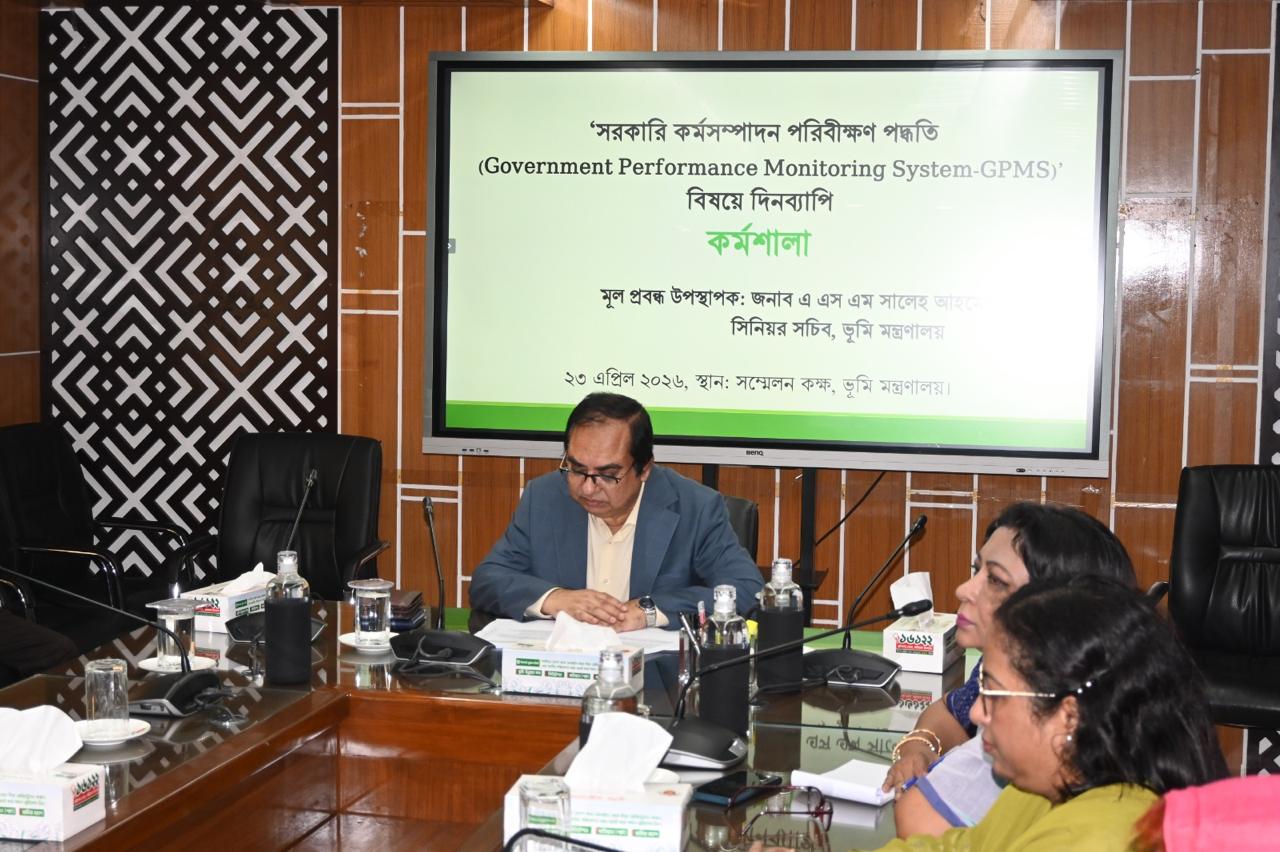
Senior Secretary of the Ministry of Land ASM Saleh Ahmed said these things in his speech as the chief guest at the workshop titled ‘Government Performance Monitoring System (GPMS)’ organized today in the meeting room of the Ministry of Land.
He also said – the future is always uncertain. But if the past trend is followed and planning is done accordingly, then the target can be reached, if not 100 percent, but close to it. This kind of idea is the origin of this monitoring system GPMS. As a result, the percentage of work that the departments are able to do can be easily measured.
The Secretary expressed hope that the officials will be able to gain more skills through this workshop.
Annual Performance Agreements or APAs were introduced in the fiscal year 2014-15 with the aim of improving efficiency, accountability, transparency and quality of public service in government activities. Under this system, ministries/divisions and their subordinate offices/agencies are committed to achieving the set targets in the light of various plans, strategies and commitments of the government. However, as some limitations were identified in the APA framework, it became necessary to transform it into a more realistic and result-based performance system. In this context, the government decided to introduce a new performance evaluation framework ‘Governance Performance Monitoring System’ (GPMS). It is a regular, structured and information technology-based monitoring system, which establishes a link between institutional plans and implementation and emphasizes on achieving target-based results.
Views: 4