
Md. Kabir Hossain:
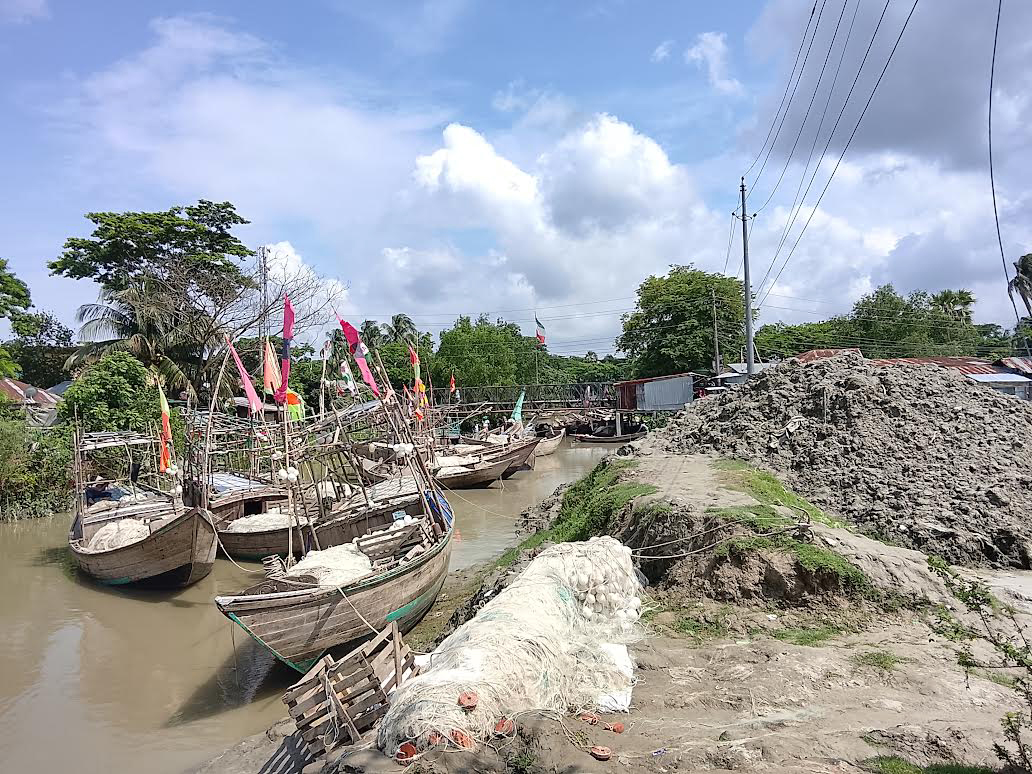
The Meghna and Tetulia rivers in Borhanuddin Upazila of Bhola were once among Bangladesh’s richest hilsa fishing grounds. During the monsoon season, the rivers would be bustling with fishing boats, and local fish landing stations were filled with the country’s prized silver hilsa. However, the picture is very different this season, as thousands of fishermen are struggling due to a sharp decline in hilsa catches.
A visit to Hakimuddin and Joya fish landing stations revealed rows of fishing boats anchored along the riverbanks, while many fishermen returned with little or no catch. The usual hustle and bustle of the fish markets is largely absent because of the shortage of hilsa.
Local fishermen said they spend a considerable amount of money every day on boats, fishing nets, fuel, and labor, but the income from their catch is far from enough to cover the expenses. As a result, many are unable to repay loans, support their families, or meet their children’s educational expenses.
Kamal Majhi, a fisherman at Hakimuddin Fish Landing Station, said, “We spend the whole day on the river, but the nets are not yielding enough hilsa. The small catch we get is not even sufficient to recover our operating costs. If this situation continues, it will become extremely difficult to support our families.”
Rahim Majhi, a fisherman at Joya Fish Landing Station, said, “We go to the river every day hoping for hilsa, but most days we return with empty nets or only a few fish. It has become very difficult for fishermen like us to earn a living.”
Md. Solim Sikder, a fish trader and commission agent at Hakimuddin Fish Landing Station, said, “This is supposed to be the peak hilsa season, yet the Meghna River is yielding very few fish. Fishermen are catching only one or two hilsa after spending long hours on the river. Most fishing families are now facing financial hardship. We hope the government will provide necessary assistance and support to the affected fishermen.”
Monoj Kumar Saha, Senior Fisheries Officer of Borhanuddin Upazila, said, “The government is implementing several welfare programmes for registered fishermen. Around 18,000 fishermen receive assistance under the Mother Hilsa Conservation Programme, nearly 12,000 under the Jatka Conservation Programme, and about 7,650 marine fishermen receive food support and other government assistance at different times. We are also continuing registration, conservation activities, and awareness programmes to protect fisheries resources.”
According to fisheries experts and local stakeholders, strict enforcement of fishing bans during the breeding season, preventing the use of illegal fishing nets, maintaining river navigability, and strengthening regular monitoring are essential to sustain hilsa production.
Thousands of families in Borhanuddin depend on the rivers for their livelihood. They now hope that hilsa will return to the Meghna and Tetulia rivers during the remaining fishing season, allowing them to recover from their financial losses.
Views: 6