
Call for ensuring quality education by overcoming the impact of climate risks
Bogura Correspondent :
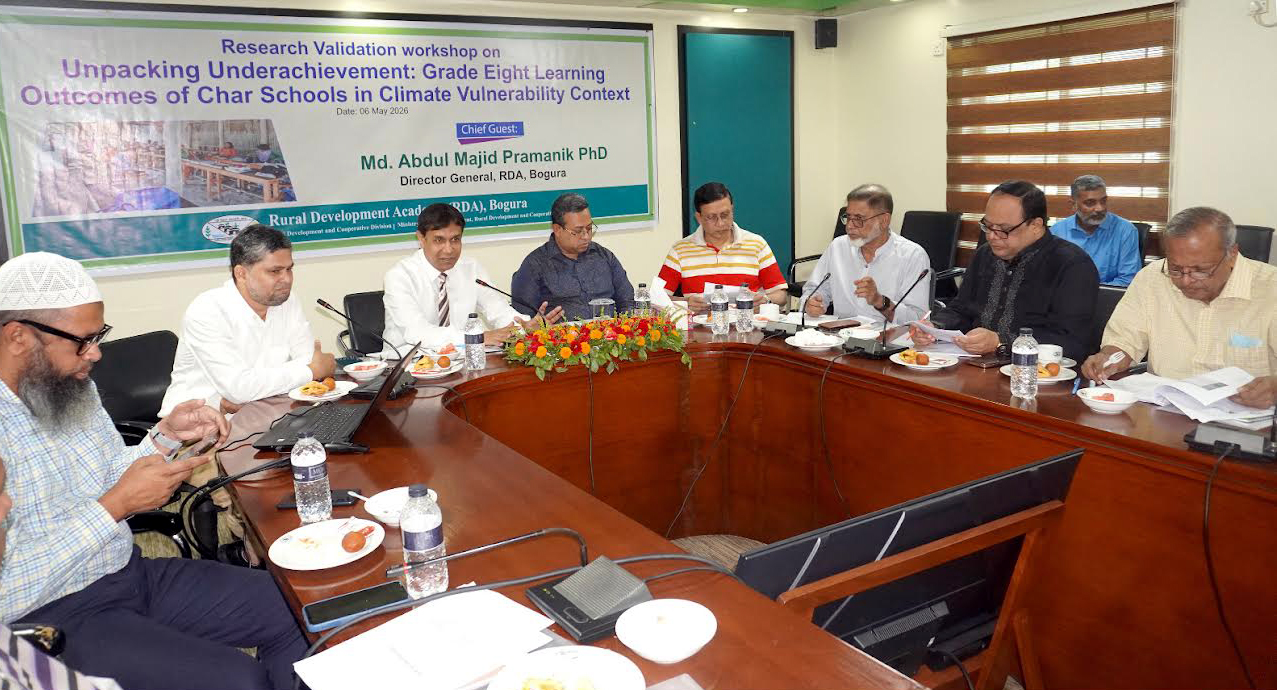
A research validation workshop was organized at the Rural Development Academy (RDA), Bogra, to identify the learning gaps of students in char (river island) areas and to find ways to overcome them. In the workshop titled “Analysis of Learning Gaps of Class VIII Students in Char Areas under Climate-Vulnerable Contexts,” the preliminary findings of the research were presented, and expert opinions were collected.
The workshop was held on Wednesday (May 6) at 11:00 AM in the RDA conference room. The Director General of the Academy, Dr. Md. Abdul MajidPramanik, was present as the chief guest. The event was presided over by the Director (Training), Md. DelwarHossain, and attended by renowned educationists, researchers, and officials from the education administration.
Special discussants at the workshop included:
- Professor Dr. Md. HafizurRahman, Shah Shamim Ahmed, and Dr. Nur-E-AlamSiddique from the Institute of Education and Research (IER), University of Dhaka.
- Professor Dr. Md. Khademul Islam, Principal of Dhaka Teachers’ Training College.
- MostafizurRahman, Deputy Director of the Campaign for Popular Education (CAMPE).
- Shafiqul Islam, District Education Officer of Kurigram.
- AKM Zakaria and Dr. Moksedul Hamid, former Directors of RDA, among other dignitaries.
The keynote paper was presented by the Director (Research and Evaluation) of RDA, Dr. Shafiqur Rashid. The workshop was moderated by Joint Director Md. Tanvirul Islam.
In his speech, the chief guest Dr. Abdul MajidPramanik stated, “About 10 million people live in the char areas of Bangladesh, a large portion of whom are exposed to climate risks. Due to various obstacles in the education system of these regions, students are falling behind in achieving desired learning outcomes.” He further mentioned that the current government has taken various initiatives to integrate the people of char areas into the mainstream of development, and RDA Bogra is working to improve the quality of education in these regions through research-based activities.
Discussants noted that floods, river erosion, poverty, and infrastructural limitations disrupt the continuity of learning for char area students. They emphasized the importance of taking sustainable and realistic initiatives to improve the quality of education.
According to the experts, it is essential to adopt alternative teaching methods, technology-based education, and plans that align with local realities. They also expressed that such research and workshops will play a vital role in policy-making.
Views: 3