
Shahin Fakir:
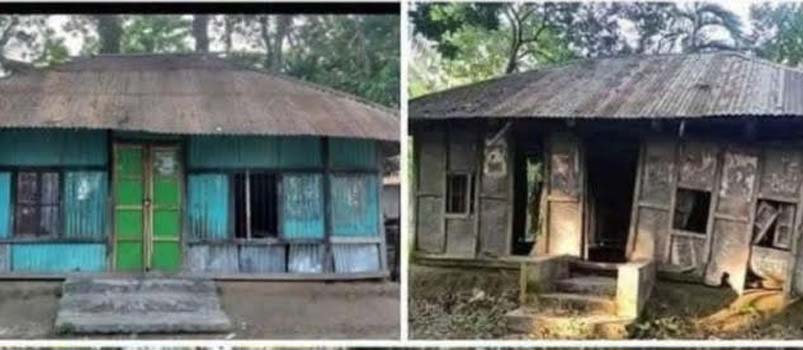
Once upon a time, most of the households in our rural towns had a Kachari Ghar. Kachari Ghar was a part of the history, tradition, culture and culture of rural Bengal. With the evolution of time, today Kachari Ghar is disappearing from Bengali culture. Kachari Ghar is the original version of a guest room or drawing room. Now Kachari Ghar is no longer seen in rural towns. In ancient times, Kachari Ghar was located in a separate open area a little away from the main house. Guests, pedestrians or meeting candidates would come and sit in this room. If necessary, there was also an arrangement to stay for a day or two in Kachari Ghar. Kachari Ghar was a symbol of the nobility of the wealthy and middle-class households of Bengal. Kachari Ghar had a corrugated tin fence around it with wooden crafts and a tin or thatched roof on top. Which was surrounded by a very natural environment.
In those days, when there were no electric fans, the Kachari Ghar was a comfortable, cool environment. Even in the intense heat, a cool breeze would blow through the open windows of the Kachari house. Discussions, court meetings, and storytelling sessions would take place in the Kachari house. In the past, when there were more people for their own family functions, the boys would stay in the Kachari house and the girls would stay in the inner house. During the rainy season, people would sit in the Kachari house to read scriptures and sing songs in the presence of the villagers. Passersby would rest in these Kachari houses for a while. In case of danger, there was a provision for overnight stay in the Kachari house.
Food was sent from the householder’s house for the guests of the Kachari house. The contribution of the Kachari house to the system of residential tutors (lodging masters) and Arri education is undeniable. Arrangements were made for the masters and Arri teachers to stay in the Kachari house.
The Kachari Ghar of some houses was also used as a Maktab in the morning. It is known from history that during the reign of Isha Khan, the Kachari Ghar was used to collect rent from the employees. During the Zamindari system, rent was also collected from the Kachari Ghar in front of the house of the influential village headman of the village.
Now, the Kachari houses are not so visible and are almost on the verge of extinction.
Views: 7