
Mohammed Masud :
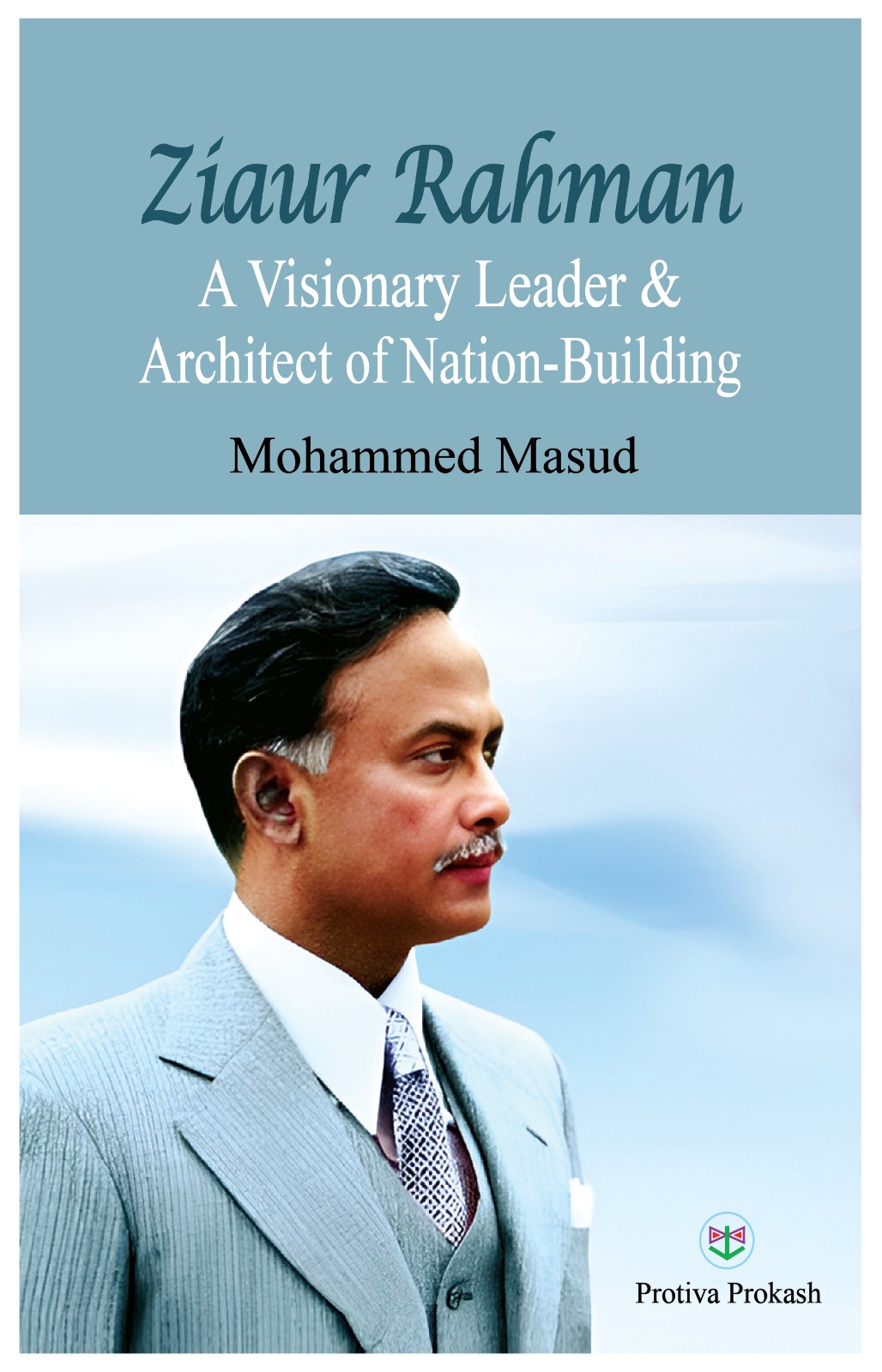
Ziaur Rahman, one of Bangladesh’s most prominent political figures and former President, was born on January 19, 1936, in Bagbari village of Bogra. He was the second among five brothers. His early education began in Karachi, where he successfully passed his secondary examinations in 1952 from Karachi Academy School. Later in 1953, he enrolled at D.J. College in Karachi. In the same year, he joined the Pakistan Military Academy at Kakul as a cadet and received his commission in the armed forces in 1955.
In 1957, he was transferred to the East Bengal Regiment and came to East Pakistan. From 1959 to 1964, he served in the intelligence wing of the Pakistan Army. In the 1965 Pakistan-India war, he demonstrated extraordinary courage in the Khemkaran sector and received a gallantry award. In 1966, he was appointed as an instructor at the Pakistan Military Academy. In 1969, he was promoted to the rank of Major and took charge as the second-in-command of the Second East Bengal Regiment at Joydebpur.
Role in the Liberation War :
On the night of March 25, 1971, when the Pakistan Army launched a brutal crackdown on unarmed Bengalis, Ziaur Rahman revolted against the occupation forces and plunged into the Liberation War. Fully aware that defeat would mean certain death, he fought for the independence of his motherland, risking the lives of his wife and children. To accelerate the war effort, he formed the Z-Force in his own name and also served as the Sector Commander of Sector 1. For his heroic contribution to the Liberation War, the government of Bangabandhu awarded him the title of Bir Uttam (the second highest gallantry award).
After the nine-month-long bloody war, when the nation was freed from the shackles of subjugation, Ziaur Rahman returned to the army and in 1972 was promoted to Deputy Chief of Army Staff. By the end of 1973, he was elevated to the rank of Major General.
Political Rise and Reintroduction of Multi-Party Democracy:
Following the assassination of Sheikh Mujibur Rahman on August 15, 1975, Bangladesh entered a period of grave political uncertainty and instability, marked by coups and counter-coups. In this situation, during the soldiers–people uprising on November 7, 1975, Zia was freed from house arrest and soon became the central figure of the people’s hopes and aspirations. His unquestionable popularity within the armed forces elevated him to state power.
On April 21, 1977, Ziaur Rahman assumed the office of the President of Bangladesh. Later, on June 23, 1978, he was elected President through a free, fair, and competitive election, defeating the Awami League-backed candidate and Commander-in-Chief of the Liberation War, General MAG Osmani, by a landslide.
On January 25, 1975, the then-government had introduced a one-party BAKSAL system through the 4th amendment of the constitution, banning all but four newspapers. In contrast, Ziaur Rahman, respecting public opinion, repealed the BAKSAL system through the 5th amendment and reinstated multi-party democracy in Bangladesh. He lifted media restrictions and reintroduced free and independent press. Where a political government that had long fought for democracy ultimately curtailed it, a freedom fighter and soldier from the military restored one of the fundamental pillars of independence—multi-party democracy—and paved the way for democratic practice. This is where Ziaur Rahman stands apart from others.
After the 5th amendment, Zia founded the Bangladesh Nationalist Party (BNP) on September 1, 1978, introducing a new political philosophy and developmental vision based on his 19-point program.
Unforgettable Contributions to Nation-Building:
Upon assuming power, Ziaur Rahman quickly improved the deteriorating law and order situation, taking strict measures against theft, robbery, and corruption. Public confidence was soon restored. During his rule, several landmark initiatives were undertaken for the socio-economic development of Bangladesh:
• Self-Reliance Movement: In late 1975, Zia launched the Self-Reliance Movement from Ulashi village in Jessore. The aim was to inspire every individual in rural areas to become self-reliant. He envisioned all of the country’s 68,000 villages as self-sufficient units. To achieve this, agriculture, irrigation, afforestation, housing, electrification, healthcare, family planning, and law and order were integrated into this movement.
• Canal-Digging Program: Zia declared food self-sufficiency as a national policy. He considered doubling food production as the cornerstone of self-reliance. For this, he prioritized canal excavation for irrigation during dry seasons, multiple cropping on the same land, and cultivating fallow lands. Nearly 900 miles of canals were excavated during his time to ensure uninterrupted irrigation during drought seasons.
• Mass Literacy Campaign: To increase literacy rates, Zia introduced the Mass Literacy Program on February 21, 1980, inspired by the spirit of the Language Movement. This widely acclaimed program successfully taught around 4 million illiterate people to read and write within a short time.
• Population Control: Identifying overpopulation as the country’s number one problem, he promoted the “One Child, One Girl, One Boy” ideal as a national policy. In 1976, he recruited 38,000 family planning workers across villages and wards to implement this program.
• Local Government System: To decentralize power and strengthen local government, he formally introduced the Gram Sarkar (Village Government) System on May 30, 1980. This allowed small issues to be solved locally, significantly reducing litigation.
• Youth Development: To rescue young people from despair, terrorism, and drug addiction, Zia organized the first National Youth Conference in 1977. In 1978, he established the Ministry of Youth and set up youth complexes across districts, providing training to create self-employment opportunities.
• Village Defense Party (VDP): To ensure better rural security, Zia founded the VDP in 1976.
• Education and Culture: For children’s intellectual growth, he established the Shishu Academy on July 15, 1977, and launched the popular TV program “Natun Kuri.” He promoted science education by creating a separate Ministry of Science and Technology. He established the country’s first Islamic University to integrate religious and general education, aiming to produce morally upright citizens.
• Women’s Development: Recognizing that national development was impossible without involving half the population, Zia established the Ministry of Women’s Affairs to empower women and ensure their dignity in society.
Economy and Foreign Policy:
President Zia expanded international markets for non-traditional sectors such as garments, frozen foods, handicrafts, and leather goods. The garment industry, which emerged under his leadership, has since become one of the nation’s largest export sectors.
Through an independent and neutral foreign policy, Shaheed President Ziaur Rahman quickly gained international attention. Moving away from the Indo-Soviet axis, he extended friendship towards the United States and China. His bold, pragmatic, and visionary diplomacy earned him respect in the Muslim world.
During his short tenure, he played the role of a mediator in the Iran-Iraq war, was elected a member of the Al-Quds Committee, expressed unwavering support for Palestine, and strengthened the Organization of Islamic Conference (OIC) into a more effective body. He pioneered sending Bangladeshi workers abroad officially, opening labor markets in the Middle East.
Zia also initiated the establishment of SAARC (South Asian Association for Regional Cooperation) to promote regional social, economic, and geopolitical unity among South Asian nations. Thus, he is regarded as the visionary founder of SAARC.
Conclusion:
Measured by integrity, he remains unmatched even today. From the Liberation War to nation-building, his role is undeniable. The grateful nation continues to honor his sacrifice with deep respect.
(Writer: Editor, The Daily Sobuj Bangladesh)
Views: 24