
SB-Sujon :
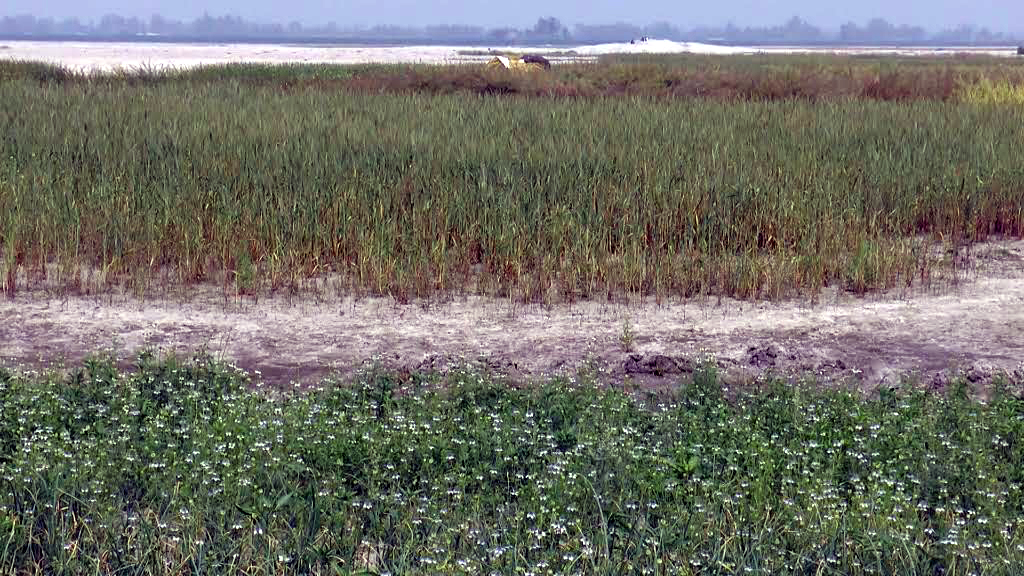
The silver chars of the Pramatta River have now turned into gold mines. Farmers are now cultivating gold in the silver chars that have emerged on the banks of these all-consuming rivers, the Pramatta. Especially the numerous chars that have emerged on the banks of Teesta and Dharla rivers are now filled with greenery. These rivers, which overflow their banks during the monsoon and bring peace to the people along the riverbanks, are becoming a blessing in the dry season and are raising hope for the people along the riverbanks. The silver chars that have emerged on the banks of the river are providing the people here with the means to survive. Many families are also thriving by capitalizing on the agricultural economy of the chars and pushing away poverty.
Every year, numerous sandy and loamy chars rise on the banks of the Teesta river, which flows through the lap of various upazilas of Lalmonirhat, Rangpur, Nilphamari, and Gaibandha districts, and the Dharla and Brahmaputra rivers of Kurigram. Farmers in the char area are cultivating various varieties of crops in these chars. The riverbed is now a feast of greenery. Wherever the eye can see, there is only greenery and greenery. No char is left empty.
On the spot, a visit to the Teesta Bridge area, Taluk Shahbaz, Charganai Char and other chars in the upazila has shown that various crops are being cultivated in each char. Farmers and agriculturists are working in the chars from dawn to dusk. The sandy soil of Teesta char has turned into white gold. Now only greenery is present across the vast char area of the river. The bumper yield of each rabi crop is bringing smiles to the eyes and faces of the farmers. All the lost farmers are weaving colorful dreams of the future in the char crops. They are trying to turn around in Rabi crops. The vast char area is filled with various crops including corn, almonds, sweet potatoes, sweet pumpkins, watermelons, peppers, and gourds. Farmers are growing golden crops in the sandy loam soil of the char. The vegetable yield is pleasing not only to the common people but also to the farmers.
According to the information received, the land of the char area that has awakened in the Teesta char is 56 thousand 94 hectares. Of this, the arable char land is 47 thousand 748 hectares. This time, vegetables have been cultivated in 3665 hectares of these chars. Potatoes have been cultivated the most. Farmers have benefited by cultivating potatoes in advance. Various Rabi crops including corn, cassava, almonds, sweet potatoes, sweet pumpkins, watermelons, peppers, and gourds are grown across the vast chest of the char. Farmers said that there is no need to fertilize sandy loam soil.
Insect attacks are also less. Therefore, there is no need to apply much pesticide. Moreover, these Rabi crops do not require much labor, so all in all, these Rabi crops are quite profitable and have already changed the fate of many people in the char areas.
After talking to farmers on the ground, it was learned that farmers on the other side of the Teesta River have turned to Rabi crops cultivation due to the good yield of various Rabi crops in the Teesta char for the past few years. To compensate for the loss of Aman, farmers in the area are cultivating various types of Rabi crops in the Teesta char.
Farmers said that Rabi crops yield twice as much as the profit from cultivating paddy and wheat. They are especially profitable in maize cultivation. They produce 40 to 45 maunds of maize per bigha. Which costs about 40 to 50 thousand taka. And the cost is 12-15 thousand taka per bigha. Apart from corn, they are getting quite profitable by cultivating kaun, almonds, sweet potatoes, and sweet pumpkin.
Farmers also said that earlier the Teesta chars were fallow. Since the yield of other crops was not as expected, crops were not grown on these lands. Now, various rabi crops are being cultivated in these chars using modern methods. This is also getting good yield and price.
Apart from Rangpur, the riverside chars of various upazilas of neighboring Kurigram, Lalmonirhat, and Nilphamari districts have also seen the same scene. There is no such fallow land anywhere in the char area. Some crop is being cultivated everywhere. And that is why the Teesta and Dharla chars have now become a gold mine for the farmers of the char area. Apart from Teesta and Dharla, the small and large chars that have emerged from the riverbeds are now giving new dreams to the people living along the riverbanks.
Many people have now opened new doors of livelihood by cultivating rabi crops in these chars. The once-flooded Jamuneshwari River, which flows through Badarganj Upazila of Rangpur, has also become a dead river. The entire river has now become cultivable land. Farmers are also making a lot of profit by cultivating various early varieties of rabi crops.
The Agriculture Department said that the chars that have emerged from the riverbeds have silty soil and produce good yields of corn, pumpkin, sweet pumpkin, almonds, and sweet potatoes, so farmers have become interested in these crops. Farmers are more inclined towards corn cultivation because they get more yield at less cost and are profitable. After corn, jute is being planted in these lands. Agriculture officers said that about 70 to 75 percent of the rabi crops here are cultivated in the char areas.
Views: 5