
Nur Islam Noyon :
Artisans in crisis of existence due to the dominance of plastic, shortage of raw materials and loss of market
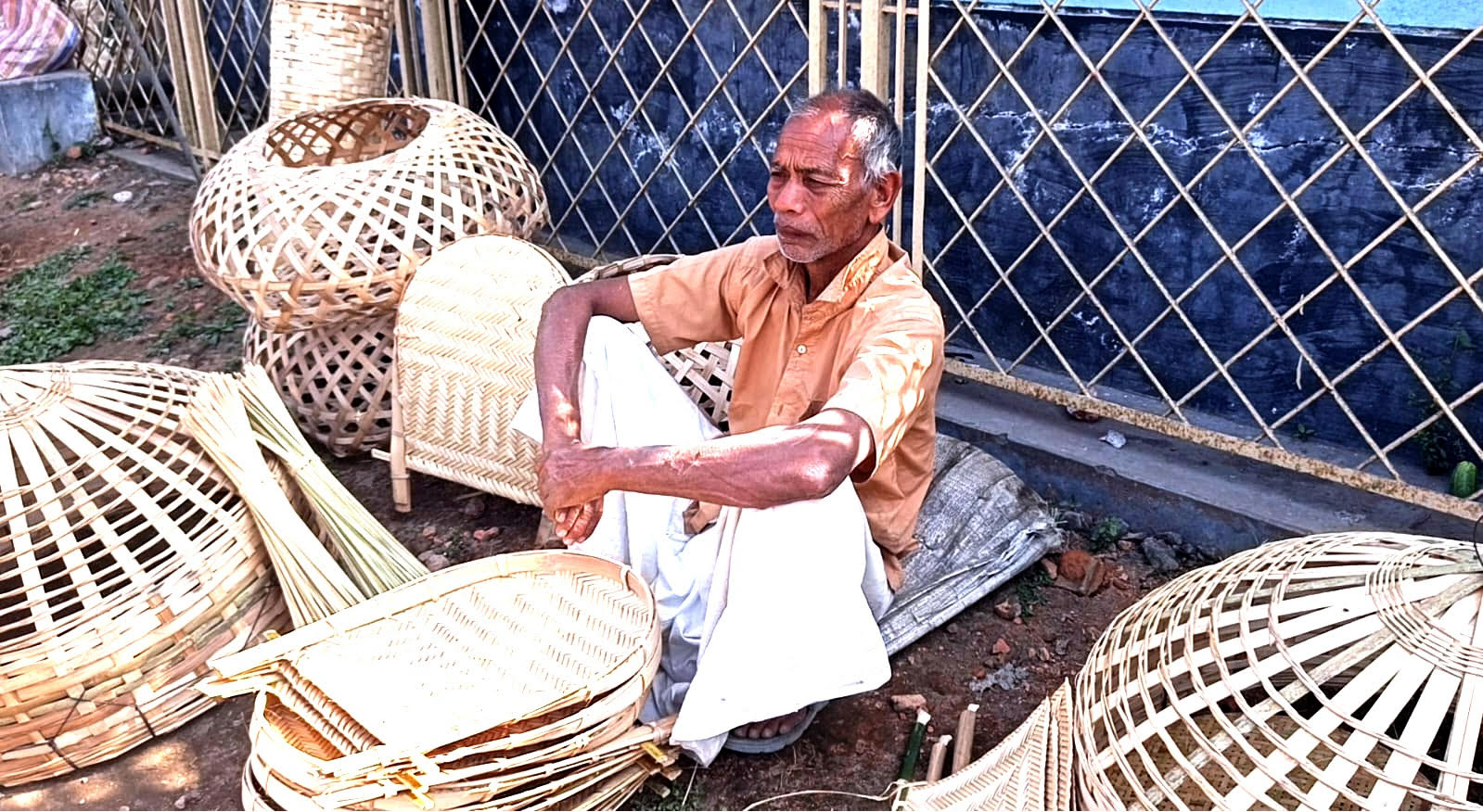
In the rural towns of Dinajpur, the sound of bamboo baskets, baskets, sieves, baskets or fishing equipment was once a familiar scene. In the morning, artisans used to sit in the courtyard of their houses and work on weaving. That scene is now almost extinct. With the race for modernity and the widespread use of plastic products, the century-old traditional bamboo industry of Dinajpur is struggling to survive today.
A visit to various rural markets, including Setabganj Hat in Bochaganj Upazila of Dinajpur, shows that the demand for bamboo products has decreased significantly compared to before. Products that were once an essential part of the household have now been replaced by cheap and durable plastic products.
Talking to artisans, it is learned that there are multiple reasons behind the decline of this industry. The rising price of bamboo raw materials, the decline in local bamboo supply, and the lack of fair prices compared to production costs have all made this profession no longer profitable. In addition, deforestation and environmental changes have also reduced the availability of bamboo.
Amjad Hossain, an artisan from Ishani village, said, “This is the profession of our fathers and grandfathers. I have been doing this since childhood. But now I can no longer support my family. Still, I could not quit.”
Fatik Chandra Roy, another artisan from the same area, said, “Earlier, I used to make a living working with bamboo. Now there is no price in the market. None of the boys and girls want to enter this profession.”
Artisan Ratan Pal (50) sighed, “Earlier, this was the way we lived. Now, if we don’t earn daily wages, our family cannot survive. That is why many are moving to other professions.”
Shivcharan, an artisan from Setabganj area, said, “Not for profit, but just to maintain the tradition, we still make kula-dala and take it to the market.”
A resident of Teghra village in Birol upazila of Dinajpur said, “Once upon a time, bamboo work was done in almost every house in our area. Now that scene is gone.”
Locals of Sada Mahal village in Setabganj also said that the industry is disappearing fast as the use of bamboo products has decreased due to the dominance of plastic.
Bangladesh Small and Cottage Industries Corporation (BSCIC) Dinajpur Deputy General Manager Md. Jahedul Islam said, “Modernization is essential to sustain the bamboo industry. There is a one to three month training facility in Dhaka. There is also a micro-loan facility for artisans. We are trying to increase supervision at the local level.”
However, experts believe that training or loans alone are not enough. It is difficult to sustain this industry without market creation, design development and government sponsorship.
This bamboo industry in Dinajpur is not just a profession, it is part of the culture and tradition of rural life. But with the changing times, that tradition is on the verge of disappearing today. They fear that if proper initiatives are not taken, this environmentally friendly industry will soon be consigned to the pages of history.
Views: 6