
Md. Rahat Islam, Creative Journalist:
Revenge and Protest: Deep Reflections of Personality, Values, and Mindset.
Revenge and protest are both powerful expressions of a person’s sense of injustice, anger, and desire for fairness. However, these two reactions differ greatly in terms of mindset, intention, consequences, and social impact. Whether an individual chooses the path of revenge or the path of protest in response to wrongdoing reveals their personality, emotional maturity, and core social values. Both revenge and protest stem from inner frustration or a strong sense of injustice, but their nature and outcomes are fundamentally different.

Revenge as an Emotion-Driven Response: Understanding Personal Vengeance and Its Psychological Roots.
Revenge is an emotion-driven and hostility-based reaction, usually born from deep personal hurt, anger, and the desire to retaliate. It reflects an individual’s emotional instability, immaturity, and personal bias—often leading to destructive and self-centered behavior. A person who seeks revenge reveals a strong yet negative tendency to establish their own version of justice.
Personal Revenge (Personal Vengeance)
Personal revenge refers to a situation in which an individual, feeling personally hurt, insulted, harmed, or deeply betrayed, seeks retaliation against the specific person responsible. It is an intense desire to “get even,” driven by the intention to inflict pain or harm on someone believed to have caused injustice.

Key Characteristics:
- Personal Motivation: It is not pursued for broader social or legal justice but arises from personal anger, resentment, and emotional wounds.
- Emotion-Driven: This reaction is fueled more by intense emotions, hostility, and vindictiveness than by rational judgment.
- Clear Target: The target of revenge is specifically the individual who is perceived to have caused the harm.
- Outside Law & Ethics: Personal revenge often bypasses legal systems, moral values, and social norms, relying instead on self-imposed justice.
Personal revenge is an emotionally charged, self-centered, and often destructive effort to take justice into one’s own hands in response to personal wrongdoing.
Family Revenge (A Generational Cycle of Collective Retaliation and Honor-Based Conflict)
Family revenge refers to a form of retaliation where not just an individual but an entire family, clan, or lineage seeks vengeance against another family or group for a serious wrong or injury. Unlike personal revenge, this is not driven by individual hurt; it is a reaction to an attack on family honor, dignity, rights, or collective identity—something that affects the whole family.

Key Characteristics:
- Collective Responsibility: The desire for revenge does not remain confined to the victim alone. It becomes a shared duty of the entire family, often seen as a moral or familial obligation. Family members unite with a collective commitment to seek retaliation.
- Generational Continuity: Family revenge often passes from one generation to the next. Even if the original incident occurred decades earlier, future generations may still carry the responsibility of fulfilling the “unfinished revenge.”
- Root Causes: Family revenge typically stems from severe disputes involving ancestral land conflicts, murder or injury of a family member, damage to family honor, or long-standing historical hostility.
- Prolonged Violence and Retaliation Cycle: This type of revenge can continue for many years, leading to repeated attacks between families. As a result, it creates a prolonged cycle of violence that affects the wider community and sometimes entire regions.
Family revenge is a long-term, inherited, and collective conflict between families—extending far beyond personal boundaries. It is a generational struggle often rooted in the pursuit of restoring lost honor, dignity, or ancestral rights.
Social Revenge: Collective Retaliation Against Historical Injustice and Systemic Oppression.
Social revenge refers to a form of retaliation in which a larger group, community, or section of society seeks retribution against another dominant group, institution, or entire system in response to long-standing historical or structural injustice, discrimination, oppression, or exploitation. This reaction extends far beyond personal or family boundaries and represents the collective anger and frustration of a marginalized group. Social revenge emerges not from individual actions, but from deep-rooted societal flaws and historical injustices.
Key Characteristics:
- Target of Retaliation: The focus of social revenge is not a single individual; rather, it is directed toward symbols of power—government institutions, dominant communities, specific ethnic groups, social classes, or entities responsible for both historical and ongoing injustice.
- Root Causes: Drivers of social revenge include long-term economic inequality, ethnic or communal oppression, political disenfranchisement, and human rights violations. When a section of society feels chronically deprived, marginalized, or exploited, collective anger begins to rise.
- Forms of Expression: Social revenge typically manifests through revolutions, mass movements, riots, boycotts, or widespread uprisings. The ultimate goal may be to establish social equality, dismantle oppressive structures, or remove the ruling power group.
- Collective Emotions: The driving force behind social revenge is a profound shared sense of insult, deprivation, and victimization that unites community members under a common cause.
Social revenge is a form of collective outrage born from systemic injustice. It reflects a community’s desire to correct historical wrongs and challenge oppressive social or state structures.
Legal Revenge: When Law Is Misused as a Weapon for Personal, Political, or Social Retaliation.
Legal revenge refers to situations in which an individual, group, or government uses the formal mechanisms of law and the justice system to harass, punish, or harm a personal, political, or social opponent. The term suggests that the true purpose of justice—fairness and impartiality—is distorted and turned into a tool of retaliation. In legal revenge, the law is strategically weaponized to fulfill vindictive motives.
Key Characteristics:
- Abuse of Legal Power: Legal revenge occurs through the misuse of legal procedures. Examples include filing frivolous, baseless, or fabricated cases; making harassment-driven arrests; or deliberately dragging someone through prolonged legal battles to exhaust them financially and emotionally.
- Underlying Intention: The aim is not to establish justice but to mentally, socially, or financially cripple the target or to publicly discredit them.
- Political and Social Context: The term is widely used in political discourse. When those in power employ state laws and institutions to weaken or eliminate political rivals under the guise of legality, it is considered political or legal revenge.
- Disguised Under Legal Authority: Unlike ordinary revenge, legal revenge hides behind the façade of legitimacy. It appears to be a lawful action on the surface, but its inner purpose is retaliatory and punitive.
Legal revenge occurs when formal legal processes are manipulated under the cover of legitimacy to settle personal scores, inflict harm, or exert political dominance.
Protest as a Reflection of Morality, Conscience, and Social Responsibility.
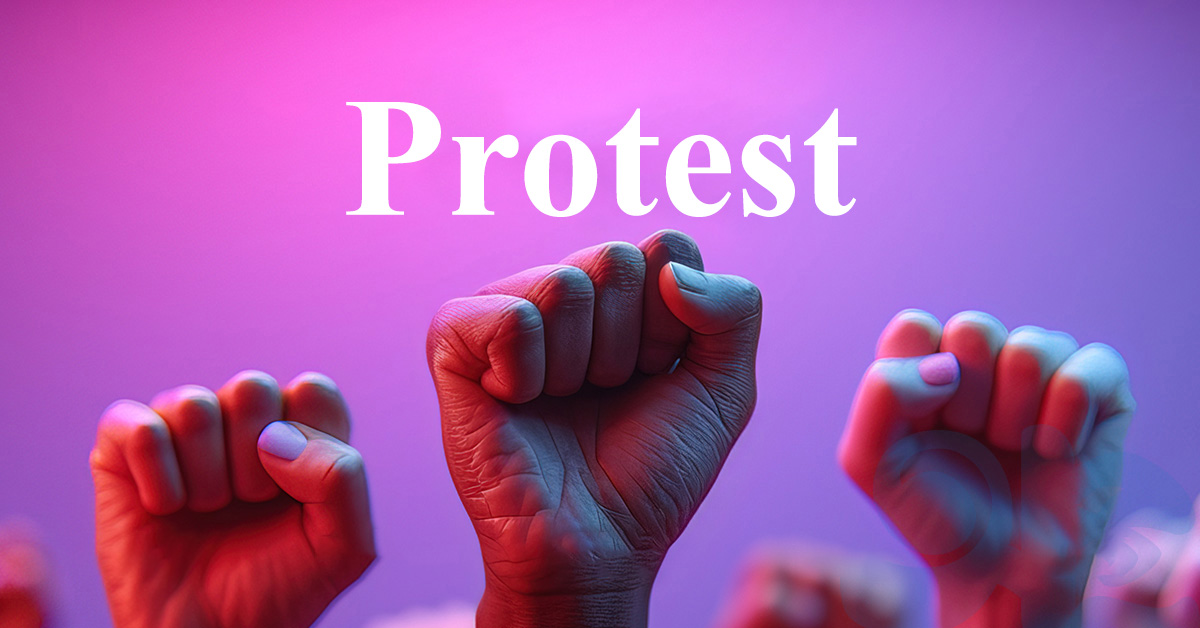
Protest represents a conscious and constructive response against broader social, moral, or structural injustice. It is an organized effort driven by a demand for change—where morality, humanity, and reason take precedence over emotion. Protest reflects the mindset of standing up against injustice and advocating for fairness. Rather than being destructive, it seeks to bring positive and meaningful transformation to society through constructive action.
Individual Protest (A Personal Stand Rooted in Conscience, Values, and Moral Integrity)
Individual protest refers to a situation in which a single person expresses personal disagreement, objection, or moral opposition against a specific issue, decision, injustice, or behavior. Even without being part of a group or mass movement, this form of protest reflects the individual’s conscience, ethical conviction, and commitment to personal values. It is an expression born entirely from one’s inner moral compass.
Key Characteristics:
- Driven by Personal Conscience: Individual protest is rooted in a person’s own values and beliefs. Whether or not others support them, the individual takes action based on their personal sense of right and wrong.
- Specific Target: The focus of individual protest is usually very specific—such as an unfair workplace decision, inappropriate behavior within the family, or personal disagreement with a particular policy or action.
- Forms of Expression: Individual protest can manifest in various ways, including;
- Resignation: Leaving a job or position to oppose unethical or unjust decisions.
- Civil Disobedience: Refusing to follow a particular instruction or rule based on moral grounds.
- Written Objection: Submitting letters or statements to authorities or responsible parties to express opposition.
- Boycott: Rejecting certain products or services due to personal ethical beliefs.
- Purpose: The primary goal of individual protest is to uphold one’s moral stance, draw attention to a specific wrongdoing, and maintain personal dignity.
Individual protest is a solitary but powerful expression of moral courage—an individual’s effort to oppose a specific injustice or decision driven by personal conscience and ethical principles.
Family Protest (Challenging Internal Injustice, Traditions, and Authority Within the Household)
Family protest refers to situations in which one or more members of a family collectively or individually express disagreement or opposition to certain decisions, imposed rules, traditional practices, or specific behaviors within the family structure. The purpose of such a protest is to challenge internal authority, correct injustice, and uphold fairness, equality, and individual rights within the household.
Key Characteristics:
- Internal Context: Family protest takes place within the internal environment of the household. Examples include:
- Unfair decisions are made by the family head.
- Discriminatory treatment of women or weaker members.
- Forced career or marriage decisions.
- Irregularities in property distribution.
- Role of Family Members: Such protests are often led by younger generations or less powerful members who raise moral objections against traditional or authoritarian practices within the family.
- Forms of Expression: Family protest may manifest in both subtle and strong ways, including:
- Open Disagreement: Voicing objections during family discussions and challenging unfair decisions.
- Non-Compliance: Refusing to follow unjust rules or harmful traditions.
- Separation: In extreme cases, temporarily or voluntarily distancing oneself from the family as an act of protest.
- Purpose: The goal is to promote a democratic and fair environment within the family, eliminate long-standing injustices, and ensure the rights and dignity of all family members.
Family protest is a moral and collective effort by family members to oppose internal injustice, question harmful traditions, and uphold fairness and respect within the household.
Social Protest (Collective Public Resistance Against Injustice, Inequality, and Faulty State Policies)
Social protest refers to a situation where a large group, community, or a significant portion of society comes together to collectively express opposition against state policies, social injustice, discrimination, or structural flaws. This is not a personal or family-level grievance; rather, it is an organized form of public resistance aimed at demanding justice, fairness, and meaningful change. In a democratic system, social protest is one of the most powerful tools through which citizens exercise their rights and influence governance.
Key Characteristics:
- Collective Action: The foundation of social protest is the participation of many people working together. It is carried out not individually, but through groups, organizations, or large-scale social movements.
- Target of Change: The focus is on reforming societal or governmental policies, laws, or influential institutions. Issues of public interest—rather than personal problems—take center stage in social protest.
- Root Causes: Social protest is driven by factors such as;
- Socioeconomic inequality.
- Misapplication or failure of government policies.
- Violence against women.
- Environmental degradation.
- Denial of rights to specific groups.
- Forms of Expression: Social protest can take various forms, including:
- Marches and Demonstrations: Walking on public roads or gathering in specific locations to express dissent.
- Human Chains and Strikes: Symbolic gatherings or halting work to highlight demands.
- Boycotts: Jointly rejecting specific products, services, or institutions.
- Purpose: The primary objective is to pressure authorities, shape public opinion, raise widespread awareness, and ultimately bring about social or political reform.
Social protest is a collective, rights-based civic action aimed at challenging injustice, inequality, and flawed policies—ultimately seeking broad, positive transformation within society.
Legal Protest (Using Law as a Tool to Challenge Injustice and Uphold Rights)
Legal protest refers to a situation in which an individual, group, or organization uses constitutionally and legally approved methods to express disagreement or opposition against a decision, policy, or injustice. It is a systematic and lawful way to assert claims while respecting the framework of the law, with the law itself serving as the primary instrument of protest.
Key Characteristics:
- Respect for the Law: The foundation of legal protest is adherence to the rule of law. Protesters ensure that their actions do not violate existing laws while voicing dissent.
- Systematic and Formal Process: Legal protest is generally well-organized and follows official procedures. Common methods include;
- Filing Court Cases: Challenging the constitutional validity of a law or government decision through Public Interest Litigation (PIL) or writ petitions in higher courts.
- Petitions and Memorandums: Submitting formal requests or complaints to the government or relevant authorities.
- Right to Information (RTI) Requests: Using legal procedures to demand transparency and information regarding government actions.
- Authorized Assemblies: Conducting peaceful gatherings, marches, or sit-ins with official permission from authorities.
- Purpose: The main goal is to correct, annul, or reform unjust policies or decisions through legal channels and to ensure the establishment of justice.
Legal protest is a peaceful and methodical effort to challenge existing injustice by using law as a tool, ensuring reform and justice within a legitimate and structured framework.

Measuring Personality: Revenge vs. Protest and Their Reflection on Human Character.
In conclusion, although both revenge and protest arise in response to injustice, their contrasting natures reveal the true essence of human character. Revenge drives an individual into a dark abyss of anger, emotion, and personal gratification, often leading only to destruction. It demonstrates that the person is still governed by impulsive feelings rather than reason. In contrast, protest serves as a beacon of morality, courage, and a commitment to collective welfare.
When a person avoids the destructive path of revenge and chooses the constructive route of protest, it not only reflects their emotional maturity and strong values but also demonstrates a willingness to play a positive role in shaping society.
Ultimately, the truest measure of our personality as human beings lies not in the challenges we face, but in how we respond to them—whether we choose the path of revenge or the path of protest.
Views: 28