
Mashahid Ahmed :
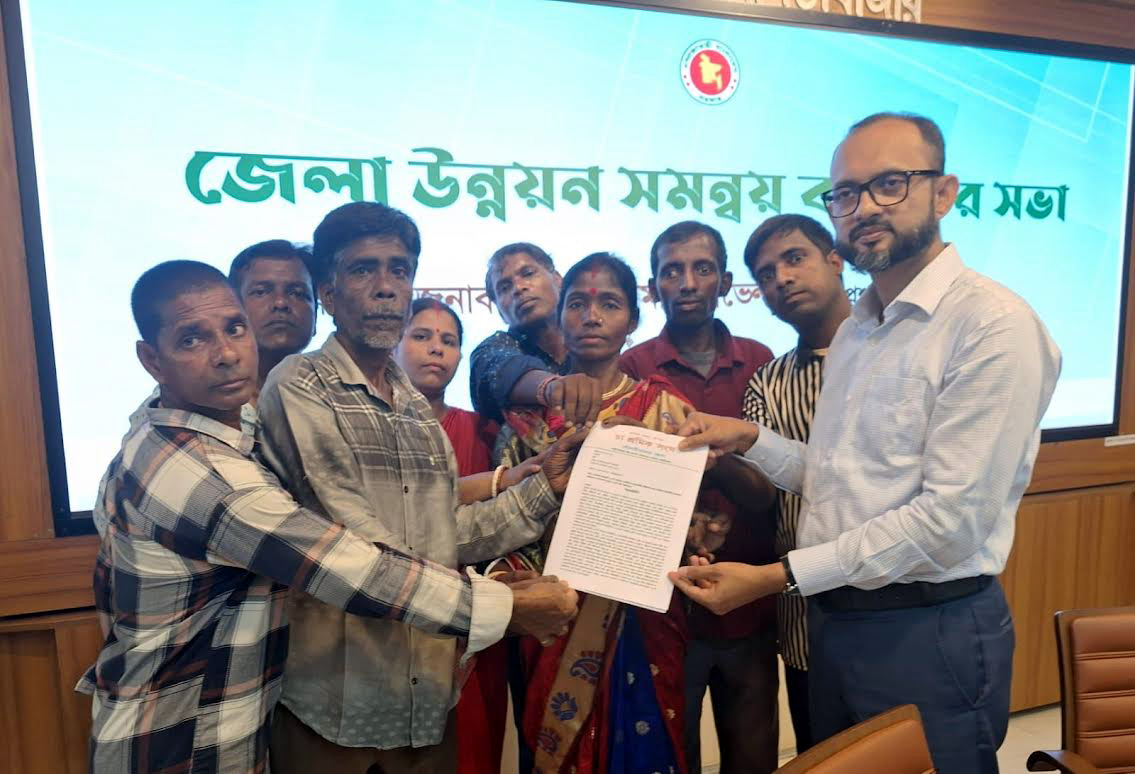
Since the medical services of Camellia Hospital have been closed for 52 years, depriving lakhs of tea farmers from 16 tea gardens managed by Duncan Brothers, the Moulvibazar District Committee of the Tea Workers’ Association has submitted a memorandum to the Minister of Labor and the Minister of Health, making 4-point demands including the immediate opening of the hospital. On the afternoon of May 17, more than a hundred workers from various gardens came to Moulvibazar, held a protest march, went to the Deputy Commissioner’s office and submitted a memorandum through the Deputy Commissioner. At this time, representatives of tea workers, including Cha-Shramik Sangha Vice President Madhu Rajak, General Secretary Harinarayan Hazra, Organizing Secretary Lakshmi Mani Bakti, Tea Worker Leader Sabuj Bauri, and other leaders handed over a memorandum to the Deputy Commissioner Touhiduzzaman Pavel. The Deputy Commissioner accepted the memorandum and assured to send the memorandum to the appropriate authorities and take necessary steps in the context of opening the hospital. The memorandum mentioned that the tea workers are practically deprived of education, medical facilities and basic rights on very low wages (maximum daily wage of 187.43 taka) and are engaged in a struggle for life. The 50-bed Camellia Duncan Foundation Hospital was inaugurated on March 26, 1994, in Shamsernagar Tea Garden, Kamalganj Upazila, for the workers and employees of a total of 16 tea gardens, including 12 in Moulvibazar district and 4 in Habiganj district (Alinagar, Shamsernagar, Chatlapur, Maijdi, Langla, Hingaziya, Pallakandi, Shilua, Rajki, Kamirpur, Ita, Chaklapunji in Moulvibazar district and Amu, Nalua, Chanpur, Laskarpur tea gardens in Habiganj) and their families, under the management of Duncan Brothers, the country’s top tea-producing company. The hospital’s website mentions that the hospital provides medical services such as medicine, orthopedics, radiology, obstetrics, etc., as well as pathology and operation theaters for diagnosing diseases. It has also been mentioned that the incidence of cancer is very high in the tea garden area and so far the hospital has identified 603 cancer patients, out of which 340 have been treated. The minimum facilities that Camellia Hospital had for the treatment of lakhs of tea farmers in 16 gardens have been closed for the last 52 days. On March 27, 2026, the medical services of the ‘Camellia Duncan Foundation Hospital’ were stopped from that day due to the unexpected death of a tea worker’s child. According to various sources including the media, on the night of March 26, a 13-year-old school girl, Oishee Ravidas, studying in the 7th grade of Babul Baridas of Shamsernagar Tea Garden, was admitted to Camellia Hospital with a headache. Oishee Ravidas died the next morning. In this incident, the aggrieved workers blocked the hospital’s doctors and staff. Later, they were rescued with the help of the administration. In this incident, the hospital authorities took the tea workers hostage and stopped medical services on the pretext of security. In the last 52 days, the news of the death of at least 10 tea workers due to lack of treatment has also been published in the newspapers. In Bangladesh, unpleasant incidents between doctors and patients in major hospitals are often published in the media, and they are resolved within a short time. But the incident of closing the hospital in this way by holding the medical services of the workers hostage is unprecedented. On top of the situation where tea workers are ‘running out of water to bring salt’ with a daily wage of only 187.43 taka, the minimum medical treatment available at Camellia Hospital has also been stopped. The rate of malnutrition and disease among the tea workers is already very high. In 2018, a survey jointly conducted by the Bangladesh Bureau of Statistics (BBS) and UNICEF revealed the pitiful health condition of tea workers. The survey revealed that 74 percent of tea garden families live below the poverty line; Due to malnutrition, 45 percent of children are stunted, 27 percent are emaciated, 47.5 percent are underweight, the rate of teenage marriages under 18 is 46 percent, the rate of motherhood is 22 percent; 67 percent of working families are without minimum sanitation facilities. Keeping tea workers deprived of basic rights, who are suffering from extreme poverty, deprived of medical facilities is a gross violation of human rights. Earlier, on April 13, the Tea Workers’ Association submitted a memorandum to the Moulvibazar District Commissioner and Civil Surgeon and the Kamalganj Upazila Executive Officer demanding the opening of Camellia Hospital. But unfortunately, no effective steps have been taken to open the hospital till date. Therefore, the Tea Workers’ Association strongly demanded the implementation of its 4-point demands, including the intervention of the Labor Minister and the Health Minister to open the hospital. The demands are to immediately open the Camellia Duncan Foundation Hospital to ensure the basic rights of the workers; Modernize Camelia Hospital by appointing adequate doctors, nurses and staff and take necessary measures to ensure adequate medical treatment, medicines and equipment and surgical facilities; take necessary measures after conducting a proper investigation into the death of the worker’s child, Oishee Ravidas, and provide appropriate compensation to Oishee Ravidas’ family; ensure proper security for everyone including the hospital’s doctors, officers, nurses and staff and patients, and ensure security by appointing Ansars in the hospital if necessary. Workers’ rally held at Moulvibazar Chowmuhana Square before submitting the memorandum meeting was presided over by Madhu Rajak, vice-president of the Tea Workers’ Association Moulvibazar District Committee. The meeting, organized under the direction of Harinarayan Hazra, general secretary of the organization’s district committee, was addressed by Rajat Biswas, general secretary of the Bangladesh Trade Union Association Moulvibazar District Committee, Lakshmi Mani Byakti, organizing secretary of the Tea Workers’ Association Moulvibazar District Committee, deputy general secretary Subhash Gaur, office secretary Ramnarayan Gaur, publicity secretary Kajal Hazra, Shatrughan Lohar, women tea workers’ leaders Namita Verma, Geeta Goala, Shefali Rally, etc.
Views: 2